

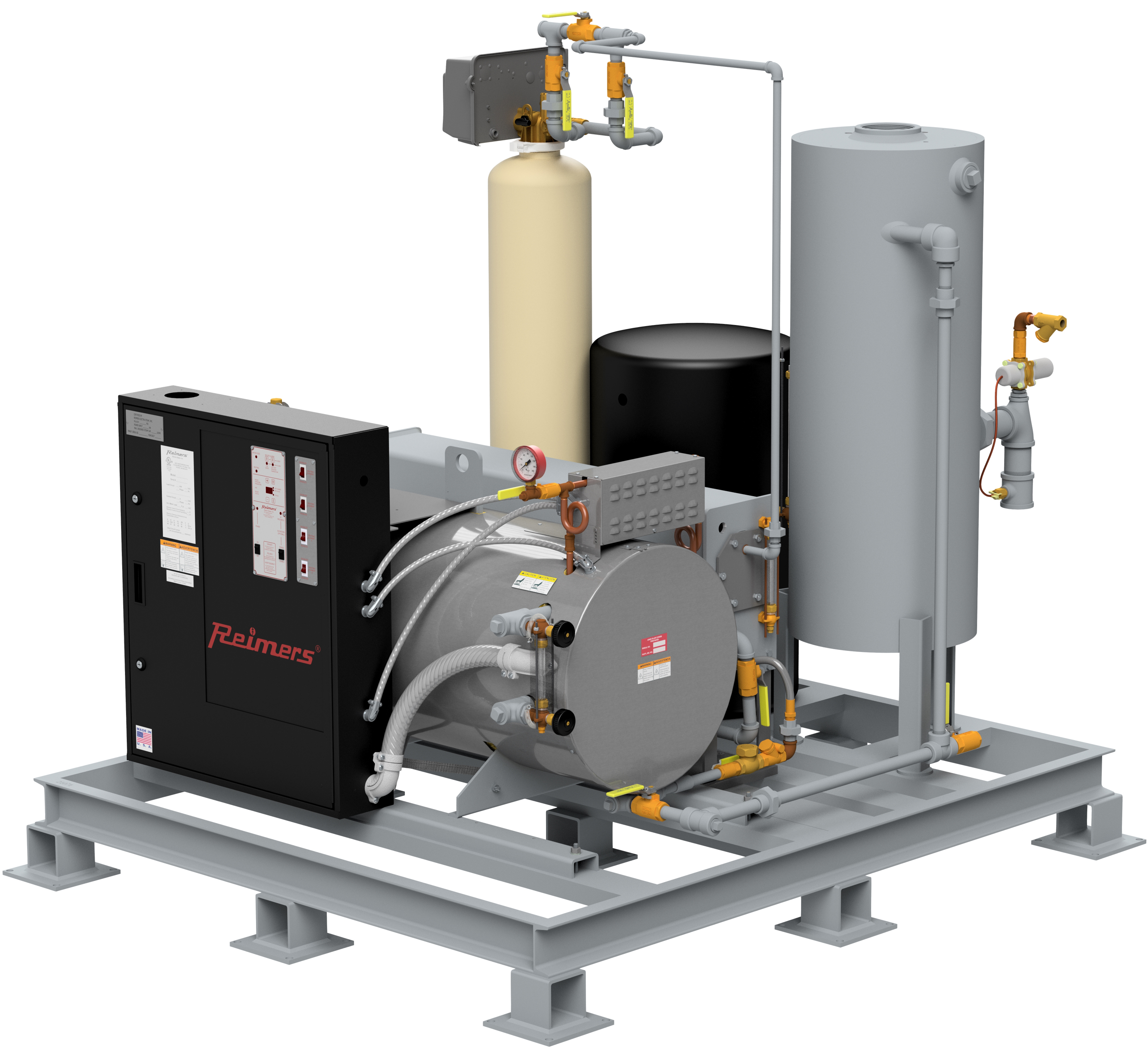
A business manager would typically add a condensate tank and water-treatment system to a steam boiler for a combination of cost savings, reliability, and boiler protection.
1. Condensate tank — recovering valuable hot water
Steam that travels through the building eventually cools and turns back into water, called condensate. Instead of sending that water down the drain, a condensate tank collects it and returns it to the boiler.
That matters because condensate is:
- Already hot, so the boiler uses less fuel to turn it back into steam.
- Already treated, so less fresh water and treatment chemicals are needed.
- A source of energy and water savings.
For a commercial operation, recovering condensate can reduce both fuel consumption and water/sewer costs.
2. Water-treatment system — preventing boiler damage
Boiler water contains minerals and other impurities. If untreated water is repeatedly heated, those minerals can form scale on the boiler's heat-transfer surfaces.
Scale acts like an insulating layer, forcing the boiler to burn more fuel and potentially causing overheating and premature failure.
Water treatment can address things such as:
- Hardness/calcium and magnesium
- Corrosion
- Dissolved oxygen
- Suspended solids
- Boiler-water chemistry and conductivity
3. Why install both?
The two systems complement each other:
Steam → condensate → condensate tank → treatment/boiler-feed system → boiler → steam
The condensate system recovers energy and water, while the treatment system keeps the boiler and piping healthy.
4. Why a business manager would care
From a business perspective, the investment can potentially mean:
Recover hot condensate. Lower fuel bill. Reuse water. Lower water/sewer bill. Reduce scale. Better boiler efficiency. Reduce corrosion. Longer equipment life. Fewer boiler problems. Less downtime. Better water chemistry. Potentially lower maintenance costs


